Bridal Flowers in Singapore: How to Choose Your Wedding Bouquet
•Posted on October 17 2026

A bouquet that looks perfect in a product photo may feel different in your hands. A bridal flower arrangement needs to work beyond the frame: its shape and scale should complement your outfit, suit the ceremony and feel comfortable to carry. Natural flowers can also vary slightly from the images, so it helps to compare more than the photograph.
This guide shows you how to compare bouquet styles by flower mix, shape and approximate dimensions, then choose an arrangement that fits your wedding palette and personal style. You’ll learn how to read product descriptions, judge bouquet size against your outfit and ceremony, and plan for warm, humid conditions when choosing flowers. From compact rounded shapes to relaxed, asymmetric designs, each style creates a different look. Use the listed composition and measurements as practical guides, not a promise that every stem will look exactly like the photograph.
Key Takeaways
- Start with your ceremony, outfit and wedding palette to find a bridal flower design that fits the overall look.
- Compare the flower mix, colours, listed dimensions and overall shape instead of relying on a close-up image alone.
- Use product measurements and stem counts as guides to scale and composition, not guarantees of exactly how a bouquet will look when carried.
- Compare designs such as BD12-Bliss using its listed flower composition and proportions.
- Before ordering, consider your preferred design, bouquet size and plan for carrying it on the wedding day.
What Makes a Bridal Flower Bouquet Right for Your Wedding?
A bridal bouquet is a hand-held arrangement chosen to complement the person carrying it and the overall wedding look. To narrow down your options, start with four details: ceremony style, outfit, colour palette and preferred flowers. These give you a practical filter for comparing designs instead of choosing from a flower photo alone.
There’s no single bouquet that suits every bride. A clean, minimal outfit might pair well with a restrained arrangement, while a romantic dress could work with softer colours or a fuller mix. A bold outfit or expressive palette may call for stronger contrast. The history and symbolism of wedding bouquets can offer inspiration, but your choice should feel personal and suit the day you’re planning.
Which details should guide your first choice?
Start with the colours in your outfit and ceremony setting. Decide whether the bouquet should blend in, pick up one of those shades or add a considered accent. Then define the mood you want: classic, minimal, romantic or more expressive. This direction helps you compare options without treating every colour or flower as equally suitable.
Next, choose between a single-flower design and a mixed arrangement. A single-flower design puts the bloom itself in focus; a mix brings different shapes and textures together. Think about how you want the bouquet to look in person and in photographs. White Dew Flower’s bridal and wedding bouquet selection includes designs across flower types and colours, so you can compare options with your palette in mind.
How does the ceremony affect the bouquet decision?
Consider how long you’ll carry the arrangement. A bouquet for a short ROM ceremony may play a different role from one carried through a longer wedding day. Picture the moments when it will be in your hands: during the ceremony, portraits and group photographs. A design that feels manageable to hold and complements your outfit throughout these moments may work better than one chosen only for its close-up appeal.
Also picture the bouquet from the distance guests and cameras will see it. Its colour and overall shape should read clearly alongside your outfit, rather than disappear against it or compete with its details. You’re choosing a personal arrangement, not planning the whole floral setting.
A bridal bouquet is different from coordinated wedding décor or a full floral package. Venue arrangements serve the space; the bouquet accompanies you. Keep these decisions separate to make your selection more focused. First choose the hand-held design that suits your ceremony and personal style, then consider other floral elements separately.
How to Compare Bridal Bouquets by Flowers, Colour and Size
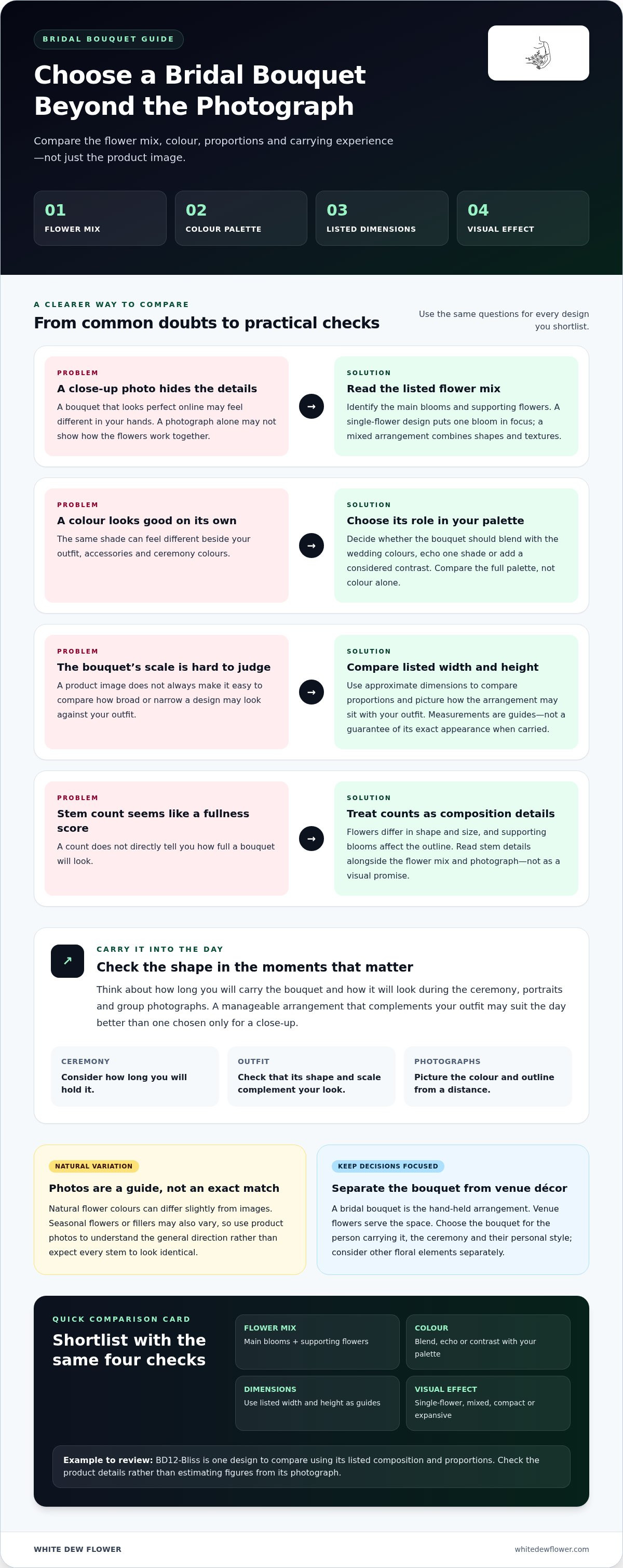
Product photos help you notice a bouquet’s overall look, but the details make designs easier to compare. Use the same four checks for each bridal flower: composition, colour palette, listed dimensions and intended visual effect. This gives you a clearer basis for choosing than comparing images alone.
- Flower mix: Note the main blooms and any supporting flowers named in the product description.
- Colour palette: Consider how the bouquet’s shades work with your outfit and the wider wedding colours.
- Listed dimensions: Compare the approximate width and height when provided.
- Visual effect: Decide whether you want a single-flower focus, a mixed look, or a compact or expansive shape.
How should flower type and colour influence your choice?
A single-flower arrangement keeps attention on one bloom, while a mixed design combines a focal flower with supporting varieties. Tulips paired with other blooms, for example, create a different impression from a bouquet made up of one flower type. Read the composition rather than assuming that every bouquet in a colour family contains the same flowers.
Assess colour as part of the full wedding palette. A shade that looks appealing on its own may feel different beside your outfit, accessories and ceremony colours. Decide whether you want the bouquet to blend with those tones, echo one of them or add contrast. Product photographs show the general direction, but natural flower colours can differ slightly from the images, and seasonal flowers or fillers may vary.
What do bouquet dimensions and stem counts tell you?
Listed width and height help you compare the overall scale of two designs. Use them to judge whether a bouquet is relatively broad or narrow, then consider how that proportion might sit against your outfit. Measurements are guides to the arrangement, not a promise of exactly how large it will appear when you carry it.
Stem counts describe the product composition, not a direct measure of fullness. Flowers differ in shape and size, and supporting blooms can affect the bouquet’s outline. For example, the pink rose and baby’s breath bridal bouquet shows how a product description can identify a rose-and-filler mix. Use its listed details alongside the photograph rather than treating the count as a visual guarantee.
Make a quick side-by-side comparison: note the flowers, main colours, listed dimensions and the look each design suggests. Then shortlist the bouquets that suit your preferred palette and proportions. Browse bridal bouquets by flower and style and compare designs using the same checklist.
Bridal Flower Bouquet Examples: Compare Distinct Looks in the Collection
Comparing real designs shows how flower choices change a bouquet’s overall look. The table below highlights the flower mixes and what to look for in each product listing. Dimensions and stem details can help you judge scale, so use the product page for the listed figures rather than estimating from a photograph.
| Product | Listed flower mix | Dimensions | Visual direction |
|---|---|---|---|
| BD12-Bliss | Pink roses and baby’s breath | Refer to the current product listing | A rose-led look with a supporting filler flower |
| BD20-White Tulip Bridal Bouquet | White tulips | Refer to the current product listing | A focused, single-flower direction |
| BD21-White Calla Lily - Faithfulness | White calla lilies, pearl and steel grass | Refer to the current product listing | A calla lily design with decorative additions |
| BD37-Pink O'Hara Rose & Orchid | Pink O’Hara roses, white Phalaenopsis orchids, tulips and spray carnations | Refer to the current product listing | A mixed-flower composition |
Which collection examples suit a classic or soft floral look?
BD12-Bliss pairs pink roses with baby’s breath, making the roses the main feature and the filler another element in the composition. Its product page lists a stem range, which can help you compare it with other options. Stem count alone won’t tell you how full it will appear, but it does clarify the stated arrangement.
BD20 keeps the focus on white tulips. Its listing also presents ribbon variants, which you can consider alongside your outfit or wedding palette. Compare the white tulip bridal bouquet with a rose design by looking at both the named blooms and each product’s listed dimensions.
Which examples create a more distinctive flower mix?
BD21 combines white calla lilies with pearl and steel grass, creating a different composition from a bouquet centred on roses or tulips. For another mixed calla lily look, the white calla lily and tulip bouquet pairs those flowers with tulips. Compare the listed ingredients first, then consider which mix best fits your style.
BD37 brings together pink O’Hara roses, white Phalaenopsis orchids, tulips and spray carnations. This gives you several flower types to assess against a simpler design. Review the product details for its dimensions and composition, keeping in mind that natural and seasonal blooms can vary. For more options, browse bridal flower designs and compare each arrangement using its listed details.
Match Your Bridal Bouquet to Your Outfit and Wedding Day
A bouquet should feel like part of your complete wedding look, not a separate choice made from a flower close-up. Check how its colour and scale work with your outfit, then plan how you’ll carry and care for it through the day. In warm, humid weather, sensible handling and transport planning are especially useful.
- Look at your outfit details. Consider its colour, neckline, sleeves, fabric and embellishments. A bouquet with a simpler outline can sit quietly alongside a detailed outfit, while a plainer look may leave room for a stronger floral accent.
- Review the full wedding palette. Compare the flowers with your outfit, accessories and ceremony details together. Decide whether the bouquet should blend with those colours or provide deliberate contrast.
- Check the proportions. Use the product’s listed dimensions to compare its scale with your outfit. Imagine holding it in front of you rather than judging it from a close crop.
- Plan for carrying it. Think about how long you’ll hold the arrangement and when you can set it down or return it to water.
How can the bouquet complement your outfit and palette?
Start with the overall impression you want. A bouquet that echoes a shade in your outfit or accessories can create a coordinated look; a contrasting colour can make the flowers stand out. Consider the full wedding palette, including ceremony details, so the bouquet feels intentional in portraits and group photographs.
Use product photos to assess the design’s general colour and shape, then read the description. Natural flowers can vary, and actual flower colours may differ slightly from the images. Allow for that variation when deciding whether a particular shade needs to match exactly or simply sit comfortably within your palette.
What should you plan for carrying and handling fresh flowers?
Map the bouquet’s journey from collection to ceremony and photographs. Estimate how long it may be out of water, and decide who will look after it between key moments. A simple handover plan can save you from managing the flowers while getting ready, greeting guests or moving between locations.
Keep the arrangement in a suitable place when it isn’t being carried, and avoid leaving it in a hot environment for an extended period. Care needs depend on the flowers and conditions, so don’t assume every bouquet will behave the same way. Planning ahead helps you focus on the ceremony instead of bouquet logistics.
If you’re planning beyond the hand-held arrangement, explore the wider wedding bouquet selection alongside your bouquet choice. Considering personal flowers and other wedding florals separately can help you coordinate the overall look without expecting one bouquet to do both jobs.
Choose and Order Your Bridal Bouquet with Confidence
You’ve compared the flowers and considered how the arrangement will fit your wedding. Now use a few final checks to move from a shortlist to a confident choice. Focus on your preferred design, its listed composition and dimensions, and how it fits your wedding-day plan. Review the product page for the bouquet’s details and ordering information.
What should you review on a product page before ordering?
Read the description for the design you’re considering. Check which flowers are listed and note any approximate dimensions or stem details. Don’t assume that another bouquet with a similar name or colour has the same composition. These details help you understand what the bridal flower includes and compare it fairly with your other shortlisted options.
Product photos help you assess the general colour and shape, but treat them as a visual reference rather than an exact preview. Natural blooms may vary, and actual flower colours can differ slightly from images. If a description mentions seasonal flowers or fillers, allow for natural variation in the finished arrangement.
Before ordering, review the product-page information for any stated options and ordering instructions. Base your decision on the details for that particular design, rather than assumptions drawn from another product, an old screenshot or a photo viewed out of context.
How can you make the final choice without overthinking it?
Keep your shortlist small. Choose two or three designs that suit your ceremony and wedding palette, then compare them against the same practical checklist:
- Preferred design: Which arrangement feels most like your personal style?
- Listed composition: Do the named flowers fit the look you want?
- Dimensions: Does the stated scale feel proportionate with your outfit?
- Wedding-day plan: Can you manage the bouquet through the ceremony, portraits and any breaks?
Give each bouquet a quick pass against those points. If one option fits your outfit, palette and schedule more naturally, you have a strong reason to choose it. You don’t need to select a design just because it’s trending or because one close-up photograph caught your eye. A bouquet that feels cohesive and practical is more likely to feel right throughout the day.
Once you’ve settled on a design, return to its product page for the description and ordering steps. Keep the product details handy as you plan the rest of your wedding day. A clear choice makes the final step straightforward.
Shop the bridal flower collection
Choose the Bouquet That Feels Like Yours
Your wedding bouquet will be part of moments you’ll remember and revisit in photographs. Choose a design that connects with your own style, not simply one that follows a trend. Picture carrying it beside your outfit, then ask whether it feels right for the ceremony and the day you have planned.
White Dew Flower offers bridal and proposal bouquets in Singapore, with product pages showing flower composition and approximate dimensions. Use those details to make a practical shortlist while leaving room for the natural variation of fresh blooms. The right choice doesn’t need to be complicated. It should feel considered, comfortable and personal to you.
Trust the design that brings your wedding look together and feels true to your celebration. Browse White Dew Flower’s bridal bouquet collection to find an arrangement that feels like yours.
Frequently Asked Questions
How far in advance should I choose a bridal bouquet?
Choose your bridal flower once your outfit, palette and ceremony plans are clear enough to guide the design. If you’re considering blooms that may be seasonal, allow time to compare options and review product details. Set a personal decision deadline that leaves room to arrange the order and wedding-day handover. For a ready-made design, use its product page for ordering information rather than assuming a standard lead time.
Can the flowers in a bridal bouquet look different from the product photo?
Yes. Fresh flowers are natural materials, so their colour, shape and stage of opening can vary from one bloom to another. Seasonal flowers or fillers may also vary, and colours can appear slightly different from product images. Treat the photograph as a guide to the design’s overall direction, not an exact preview of every stem. If a precise shade matters, keep your palette flexible enough to accommodate subtle differences.
Is a bridal bouquet necessary for a ROM ceremony?
No, a bouquet is optional for a ROM ceremony. Carry one if you want a personal floral detail in the ceremony and photos, or go without one if you prefer a simpler look. Consider what feels comfortable for signing, exchanging rings and posing for photographs. If you want flowers, a compact arrangement may be easier to manage during a short ceremony, but the choice depends on your style and plans.
Can I use the same bridal bouquet for the ceremony and wedding photographs?
Yes, one bouquet can accompany you through the ceremony and portraits, creating a consistent look across the day’s photos. Include a safe place for it between shots in your schedule, especially if you’ll move between indoor and outdoor settings. You can also plan photographs with the bouquet held at different heights so it works in both close portraits and wider group pictures.
How should I keep a fresh bridal bouquet looking its best on the wedding day?
Keep the bouquet in water in a cool, shaded place until it’s needed, and avoid leaving it in direct sun or a warm vehicle. If you’ll be away from it for a while, ask a trusted person to care for it and return it to water when practical. Warm, humid weather makes it sensible to plan these handovers in advance. Flower care needs can differ, so follow any instructions provided with your arrangement.
What does a white bridal bouquet traditionally represent?
White bouquets are often associated with purity, innocence or new beginnings in some wedding traditions. Meanings aren’t universal, though, and interpretations can differ across cultures, families and personal beliefs. A white arrangement may also appeal simply because it works with a particular outfit or palette. If symbolism matters to you, consider what the colour means within your own background and relationship rather than relying on one traditional interpretation.
Comments
0 Comments
Leave a Comment