How to Keep Bouquets Fresh: Floral Longevity in Singapore
•Posted on September 20 2026

The secret to floral longevity in the tropics isn't just about finding the coolest room in your house; it's about winning the battle against invisible bacteria. Many people assume Singapore’s high humidity is the only reason their flowers droop, but the real culprit is often the warm, stagnant water sitting in the vase. Learning how to keep bouquet fresh in our unique climate requires a shift from a "set and forget" mindset to a simple three-minute daily ritual.
It's incredibly frustrating to receive a stunning arrangement only to watch the petals brown within 48 hours. You want your gift to remain a vibrant centerpiece, not a source of stress. This guide promises to help you master professional techniques to extend your bouquet’s life for up to seven days. We'll walk you through actionable daily steps, from the science of angled stem cuts to choosing the most resilient blooms for your home or office. By the end, you'll have the expert knowledge needed to keep every petal looking peak-fresh in the Singapore heat.
Key Takeaways
- Understand how Singapore’s high humidity and tropical heat accelerate wilting and what you can do to slow down the natural respiration process.
- Learn exactly how to keep bouquet fresh for up to seven days by maintaining a "hospital clean" vase and using professional nutrition packets correctly.
- Identify the unique hydration needs of different flower varieties, from heavy-drinking sunflowers to delicate, temperature-sensitive peonies.
- Discover the "Cool Zone" strategy for optimal placement, protecting your blooms from the drying effects of direct sunlight and air-conditioning drafts.
- See why starting with professionally conditioned stems and utilizing same-day delivery is the most effective way to maximize your bouquet's vase life.
Why Fresh Bouquets Wilt: Understanding the Singapore Factor
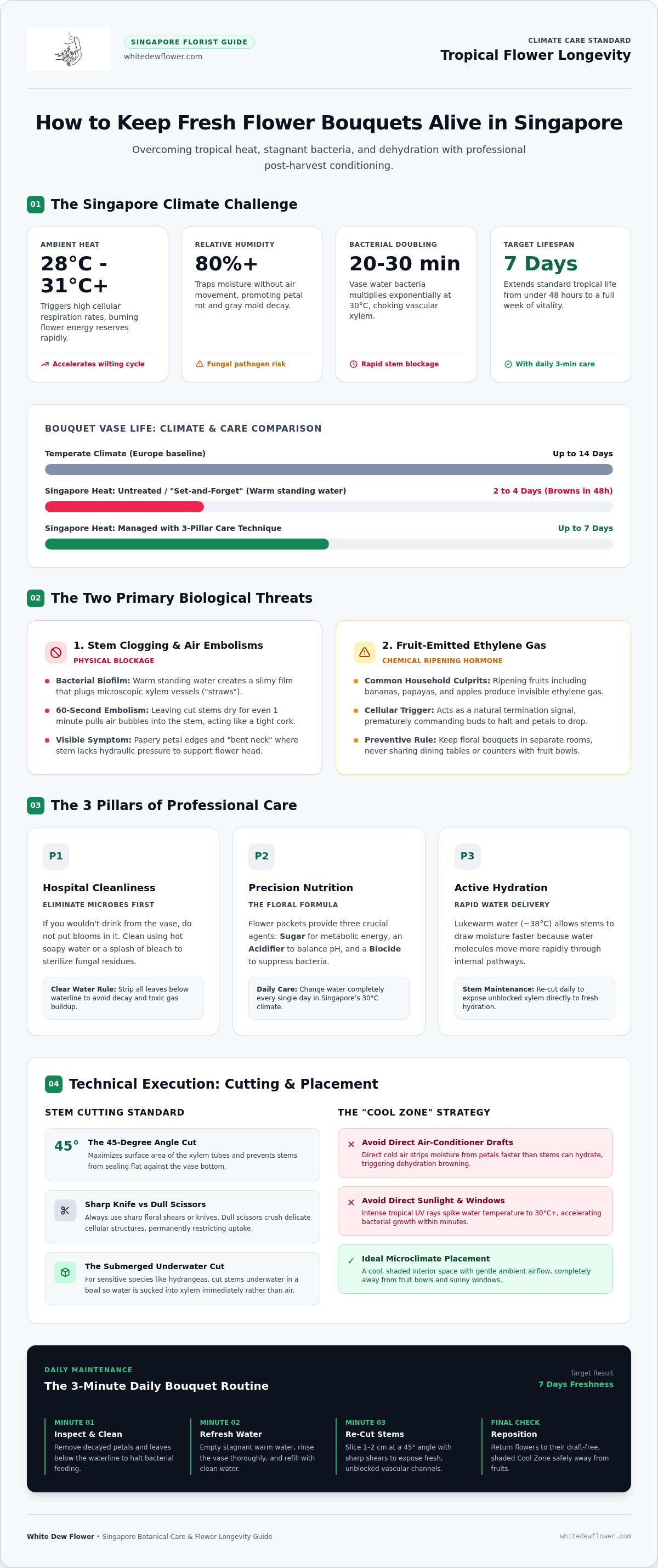
Singapore’s tropical climate presents a unique set of challenges for anyone learning how to keep bouquet fresh. Our average daily temperature sits around 28°C, with highs often exceeding 31°C. This heat triggers a high respiration rate in cut flowers. Essentially, the blooms "breathe" and consume their energy reserves much faster than they would in a temperate environment. This metabolic speed is a primary reason why a bouquet that lasts two weeks in Europe might struggle to survive five days here.
While our high humidity (often over 80%) can prevent petals from drying out too quickly, it also creates a perfect environment for fungal decay. Without proper air circulation, moisture can trap against delicate petals, leading to "petal rot" or gray mold. In local homes, the urban environment adds another layer of complexity. You are often choosing between the stifling heat of an open-air living room and the dehydrating, direct drafts of an air-conditioner. Both extremes lead to rapid dehydration. You'll recognize the first signs of trouble when petal edges turn papery or when the "bent neck" phenomenon occurs, where the stem loses the strength to hold up the flower head.
The Science of Stem Blockage
Understanding the internal "plumbing" of a flower is essential for longevity. Flowers use a vascular system called the xylem to pull water up the stem. In Singapore's warmth, bacteria in vase water can double every 20 to 30 minutes. These microorganisms create a slimy film that physically plugs the stem's straw-like tubes. If a stem is left out of water for even a minute, air bubbles, known as embolisms, can enter the xylem. This acts like a cork, preventing any further water uptake. This blockage is a major factor that shortens the post-harvest vase life of your arrangement.
Ethylene Gas: The Invisible Killer
Ethylene is an odorless, invisible gas produced by ripening fruits like bananas, papayas, and apples. It acts as a ripening hormone that signals flowers to reach the end of their life cycle. Many Singaporean homes keep fruit bowls in the kitchen or dining area, which are often the same places people display flowers. If your bouquet is too close to these fruits, you'll notice premature petal drop, yellowing leaves, or buds that refuse to open. Signs of ethylene damage are often sudden and irreversible. Keep your floral arrangements in a separate room from your produce to avoid this invisible threat.
The 3 Pillars of Professional Flower Care
Mastering how to keep bouquet fresh relies on three fundamental principles: cleanliness, nutrition, and hydration. In Singapore's heat, these aren't just suggestions; they're requirements. Start with a "hospital clean" vase. If you wouldn't drink out of it, don't put your flowers in it. Use hot, soapy water or a splash of bleach to scrub away old bacteria from previous arrangements. This prevents the rapid microbial growth that clogs stems within hours of delivery.
Nutrition is the second pillar. That small packet of flower food included with your fresh flower gift contains a precise mix of sugar for energy, an acidifier to lower the water's pH, and a biocide to kill bacteria. If you run out, following Penn State Extension's floral care recommendations can help you maintain the right balance. Finally, hydration is about speed. While room-temperature water is standard, using slightly lukewarm water (around 38°C) can help stems draw moisture faster because the molecules move more quickly. Re-cutting is the most vital step in floral care, as it removes the dried-out or blocked ends of the stem to provide a clear path for water to reach the bloom.
The Perfect Cut: Angle and Frequency
Cutting at a 45-degree angle is non-negotiable. This maximizes the surface area of the xylem, the "straws" within the stem, allowing the flower to drink more effectively. Always use sharp floral shears or a clean kitchen knife. Avoid dull scissors, as they crush the delicate vascular tissue and restrict water flow. For sensitive varieties like hydrangeas, try the "underwater cut" technique. By trimming the stem while it's submerged in a bowl of water, you prevent air from entering the stem and causing a blockage.
Vase Water Management
In our tropical climate, you must change the vase water every single day. Standing water at 30°C is a breeding ground for rot. Follow the "clear water" rule: strip away any leaves that sit below the waterline. Submerged foliage decays rapidly, releasing ethylene and feeding bacterial blooms. If you don't have commercial flower food, a simple homemade recipe works well. Mix two tablespoons of lemon juice, one tablespoon of sugar, and half a teaspoon of household bleach into a liter of water. This mimics professional solutions by providing food while keeping the water acidic and sterile.
Variety-Specific Care: From Sunflowers to Peonies
Different flowers have wildly different hydration needs. While a rose might thrive in deep water, a tulip prefers a shallower drink. Managing woody stems versus soft, hollow stems is a fundamental skill in knowing how to keep bouquet fresh. Woody stems, like those found on roses and lilies, require a clean, sharp cut to expose the internal vascular tissue. Conversely, soft stems are much more prone to bacterial rot if they are submerged too deep. For a deep dive into these physiological differences, Iowa State University's cut flower care guide offers excellent technical insights on stem management.
It's also vital to know which flowers are "bad neighbors." Some varieties, like daffodils, secrete a toxic sap that can kill other flowers in the same vase. If you have a mixed arrangement, monitor it closely. If one type of flower starts wilting significantly faster than the others, it might be reacting to a neighbor's secretions or competing for oxygen. In such cases, separating the bouquet into smaller, variety-specific vases can often save the remaining blooms.
Caring for High-Maintenance Blooms
Roses often suffer from "bent neck" when air bubbles block water flow. A quick professional trick involves re-cutting the stem and dipping the bottom inch in boiling water for 30 seconds before returning it immediately to cool water. This helps clear the blockage. Hydrangeas are unique because they can actually "drink" through their petals. If they start to wilt, try misting the heads or even submerging the entire flower head in cool water for 30 minutes. For peonies, the challenge is often getting tight buds to open. Use lukewarm water and gently massage the outer sepals to encourage the bloom to unfurl safely.
Sturdy Favorites for Longevity
Sunflowers are beloved for their resilience, but their heavy heads require sturdy support and deep water. Because they are heavy drinkers with thick, fibrous stems, they need daily water top-ups. You can find more variety-specific advice in our guide to sunflower bouquets. Baby’s breath is arguably the easiest to manage. Once the fresh stems begin to age, simply remove the water and hang them upside down in a cool, dry spot to create a lasting dried arrangement. Tulips, however, continue to grow even after they are cut. They stretch toward light sources and can become "floppy" if the water is too deep. Keep tulips in cold water with only a few inches of depth to slow this stretching and maintain their structural integrity.
Optimal Placement: Where to Keep Your Flowers
Placement is the final piece of the puzzle. In Singapore, your choice of display spot can double or halve the life of your blooms. Identifying a "Cool Zone" in your home is the most effective way to learn how to keep bouquet fresh. Direct sunlight is a death sentence for cut flowers. Even an hour of intense midday sun through a window can scorch delicate petals and cause irreversible wilting. Position your vase in a spot that receives bright, indirect light rather than harsh, direct rays.
Air-conditioning is generally a friend to your bouquet. It lowers the ambient temperature to an ideal range of 20°C to 24°C. However, it becomes a foe if you place the vase directly in the line of the blower. This concentrated, dry air strips moisture from the petals faster than the stems can drink. Ceiling fans are equally dangerous. The constant draft creates a wind-chill effect that dehydrates the arrangement rapidly. Keep your flowers in a corner with stable air rather than under a high-speed fan.
Managing Temperature Fluctuations
Singapore homes experience significant heat spikes when you leave for work and turn off the air-con. Moving your flowers is a proactive way to learn how to keep bouquet fresh during the hottest hours of the day. Move your vase to the coolest part of the house, such as a shaded hallway or a tiled bathroom, before you head out. The "Fridge Method" is a professional secret, but it's only practical for home users if the fridge is drink-clean and set between 5°C and 8°C. Be mindful of the afternoon sun in HDB flats and condos. Shared walls often radiate heat long after the sun goes down, so keep your vase at least 30cm away from exterior-facing walls.
Avoiding Contamination
Distance from the kitchen is vital. Cooking fumes and oily vapors can coat petals and clog their pores. Keep your arrangement away from electronics like gaming consoles, televisions, or routers. These devices emit constant, subtle heat that dries out the air immediately surrounding the vase. Finally, prioritize pet safety. Many popular varieties, including certain lilies and tulips, are toxic to cats and dogs. Place your bouquet on a high, stable surface away from curious paws, but ensure it isn't so high that it sits in the direct path of a ceiling fan's draft.
Shop fresh bouquets for same-day delivery in Singapore
Freshness Guaranteed: Starting with the Right Blooms
Starting with a high-quality arrangement is 90% of the battle when learning how to keep bouquet fresh. If stems have already spent days in a non-refrigerated bucket in a humid shop, their internal energy is already depleted. This is why choosing same-day flower delivery in Singapore is the most reliable way to maximize vase life. By bypassing long display times in traditional retail stores, you receive blooms at their peak physiological strength. This is especially critical for graduation bouquets, which often have to endure hours of outdoor heat and photo sessions before finally reaching a vase.
The White Dew Flower Difference
Our approach centers on a seamless cold chain. We utilize temperature-controlled flower vending machines across the island, calibrated to stay between 5°C and 8°C. This specific range prevents the thermal shock that typically occurs in Singapore’s ambient humidity. Our Omakase series allows our florists to select the sturdiest, freshest blooms arriving each morning, ensuring your gift isn't just beautiful but durable. Even our budget series follows these strict freshness standards, proving that affordability doesn't mean compromising on the health of the stem.
How to Order for Maximum Longevity
To get the absolute best results, timing matters. Place your online orders before 1 PM for same-day delivery. This ensures your flowers are prepared and dispatched within the same business cycle they were conditioned. If you're purchasing from one of our 24/7 vending machines, look for arrangements with tight buds that are just beginning to show color. These have the most potential for a long life once they open in your home.
Since vending machine purchases are walk-up only, they are ideal for last-minute gifts. Once you get your bouquet home, remember the re-cutting ritual. Transitioning a chilled flower from a 5°C machine to a Singaporean living room requires an immediate fresh cut and clean water to kickstart hydration. This simple step is the ultimate secret on how to keep bouquet fresh for the full week ahead. By combining professional-grade starting conditions with your daily care routine, you'll see a dramatic difference in how long your flowers stay vibrant.
Enjoy Vibrant Blooms All Week Long
You now have the professional toolkit to ensure your floral gifts thrive for seven days or more. Mastering how to keep bouquet fresh in Singapore is a balance of environmental control and simple daily maintenance. By keeping your vase hospital-clean, refreshing water daily, and choosing the right "Cool Zone" for display, you can effectively counter the effects of tropical heat and humidity. These small actions prevent bacterial growth and keep your flowers drinking efficiently.
White Dew Flower supports your gifting needs with 24/7 climate-controlled vending machines and islandwide same-day delivery. We prepare our flowers daily to ensure every stem reaches you at peak integrity. Our automated kiosks protect the health of each bloom until the moment you pick them up.
With the right care and a quality bouquet, you can enjoy the natural beauty of fresh flowers long after the initial surprise. We look forward to helping you make every occasion special with blooms that stay bright and beautiful.
Frequently Asked Questions
How long should a fresh bouquet typically last in Singapore?
A fresh bouquet in Singapore typically lasts between 3 to 5 days in a non-air-conditioned room. If you keep your arrangement in a cool, air-conditioned environment, you can extend this to 7 or even 10 days. Longevity depends heavily on the flower variety and how diligently you follow the daily care ritual. Starting with professionally conditioned blooms from a temperature-controlled source is the best way to maximize this timeframe.
Can I use aspirin or sugar to keep flowers fresh?
You shouldn't use sugar alone because it feeds bacteria that clog stems. While sugar provides energy, it requires a biocide like bleach to keep the water clean. Aspirin is a common household myth that doesn't significantly help. The most reliable method for how to keep bouquet fresh is using the professional flower food packet provided. These packets contain the perfect balance of sugar, acidifiers, and antibacterial agents to nourish your blooms safely.
Is it better to use tap water or filtered water for my flowers?
Tap water in Singapore is perfectly safe for your flowers. You don't need to use filtered or distilled water. However, the temperature of the water matters more than the filtration. Using lukewarm water is often better than cold water because the molecules move faster, helping the stems absorb moisture more quickly. Always ensure the vase is drinking-clean before filling it to prevent immediate bacterial contamination of the fresh water.
Should I leave the plastic wrapping on the bouquet?
It's best to remove the plastic wrapping once you've displayed your bouquet at home. While the wrapping protects the flowers during transport, it traps heat and moisture around the petals in our humid climate. This lack of air circulation creates a perfect breeding ground for gray mold and fungal decay. Removing the packaging allows the blooms to breathe and prevents the rapid petal rot often seen in tightly wrapped arrangements left on a table.
Why are my flower stems turning slimy and how do I fix it?
Slimy stems are a clear sign of bacterial growth, which is the number one enemy of floral longevity in the tropics. This slime plugs the vascular system of the flower, preventing it from drinking. To fix this, remove the flowers and wash your vase thoroughly with hot, soapy water. Trim about 2cm off the bottom of each stem at a 45-degree angle to expose fresh tissue. Refill the vase with clean water and fresh flower food immediately.
Do I need to put my flowers in the fridge at night?
You don't necessarily need to put flowers in the fridge, though it can help if your home gets very hot at night. If you choose this method, ensure your fridge is set between 5°C and 8°C and is free of ripening fruit. Fruit emits ethylene gas, which will actually kill your flowers faster. For most people, simply moving the bouquet to the coolest, shaded part of the house or an air-conditioned bedroom is more practical.
What are the longest-lasting flowers for the Singapore heat?
Sunflowers, carnations, and orchids are among the longest-lasting flowers for Singapore's climate. These varieties have sturdier cell structures that handle heat better than delicate blooms like hydrangeas. If you're looking for a gift that survives the humidity, consider these resilient choices. Selecting these varieties is a great first step in how to keep bouquet fresh for longer. Starting with a bouquet from a climate-controlled vending machine also gives these hardy varieties a significant head start.
How can I revive a wilted rose?
You can often revive a wilted rose using the "boiling water" trick. Re-cut the stem at a sharp angle and place the bottom inch in an inch of boiling water for about 30 seconds. This heat helps force out air bubbles that cause "bent neck." After 30 seconds, move the rose immediately into a vase of cool water. The change in pressure often kickstarts the hydration process and pulls water back up to the drooping head.
Comments
0 Comments
Leave a Comment