Everyday Flower Arrangements for Home: A Practical Guide
•Posted on October 14 2026

A welcoming home arrangement isn’t about using more flowers. It’s about choosing a size, colour palette and spot that work for the room. Everyday flower arrangements for home should fit the way you use each space: a full bouquet may crowd a small dining table, while a few well-chosen stems can add colour without getting in the way.
Choosing blooms, a vase and a place to display them can feel like a lot of decisions, especially in Singapore’s warm, humid conditions. You don’t need specialist tools or a complicated design. A few practical choices can help you create a balanced display that suits your home and is easy to care for.
This guide explains how to choose flowers and vessels, arrange stems with a sense of proportion, and find a suitable spot, from a console to a dining table. You’ll also find straightforward care tips for refreshing water, trimming stems and keeping blooms away from heat.
Key Takeaways
- Choose flowers and a vase to suit your room’s colours, available space and daily routine.
- Use everyday flower arrangements for home to create a focal point without crowding surfaces or interrupting daily activities.
- Build a balanced shape gradually, using blooms that work well together and leaving room between stems.
- Refresh vase water, check stems and remove spent blooms as part of regular care.
- Choose a ready-made arrangement when you want flowers displayed without arranging the stems yourself.
Why everyday flower arrangements for home need a different approach
An everyday display has a different purpose from flowers chosen for a celebration. It should suit the room, fit into your routine and be manageable to care for. An occasion bouquet makes a statement for a moment; an everyday home arrangement is designed to sit comfortably alongside daily life.
That changes how you choose and place flowers. Event flowers can be planned around one setting or gathering, while a home display needs to work on ordinary days too. Consider its footprint, how stable the vase is and whether you can reach it easily to change the water or clean the surface. When a display fits your routine, it feels like part of the room rather than an obstacle.
Flowers add colour, form and a focal point, but they don’t need to fill every corner. One modest arrangement can bring a considered detail to a sideboard or dining table. For more context on balance, proportion and other principles of floral design, see how these elements shape an arrangement. Start with what works in the room, then refine the look to suit your home.
What makes an arrangement practical for everyday use?
Start with the space available. Leave enough room for plates on a dining table, keys near an entrance or a book beside a sofa. Choose a stable vessel that is less likely to tip if the surface is bumped, and place it where you can reach it for routine care. A compact grouping or a few stems with open space around them can sit comfortably alongside changing furnishings and decor.
Think about how the household uses the room. If you prefer low-effort care, choose a simple arrangement and a spot that’s easy to access. White Dew Flower offers fresh flower arrangements for a ready-made display, so you can bring flowers into your home without arranging the stems yourself.
How flowers change the feel of a room
Colour, shape and height affect how an arrangement looks against its surroundings. A soft tone can echo cushions or artwork, while a contrasting colour can draw attention to a clear spot. Rounded blooms create a different outline from slender stems. Height can make an arrangement visible across a room or keep it unobtrusive on a low surface.
Use one display as a focal point instead of spreading small decorations across every surface. On a console, flowers can give the eye a natural place to pause. On a dining table, a lower arrangement can keep the view across the table open. Let the room guide the scale and placement, then adjust the display if it interrupts how you move or use the space.
Choose flowers, colours, and a vase that suit your home
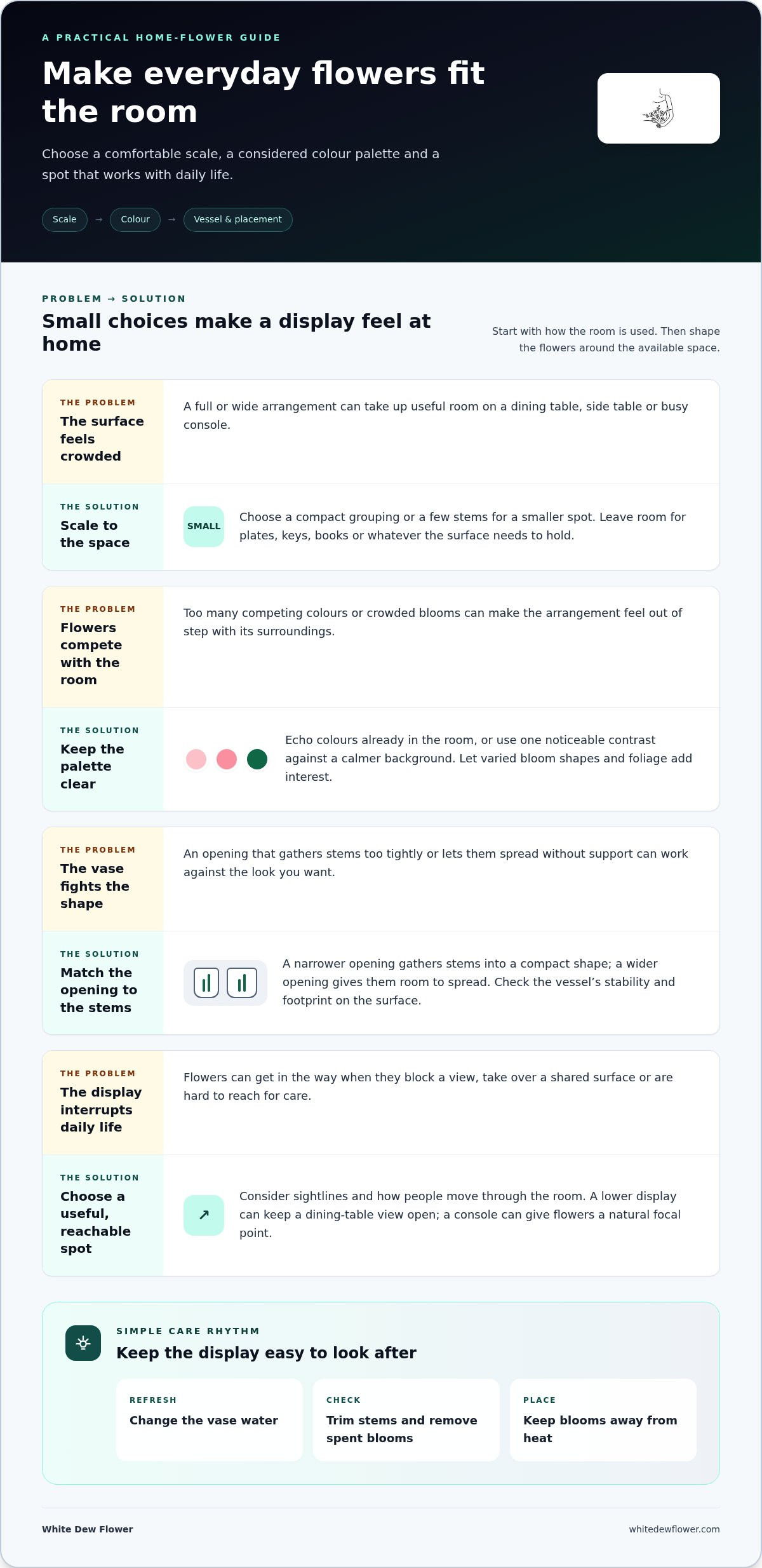
Start with the surface, then choose the flowers. A compact arrangement takes up less room, making it easier to place on a side table or a dining surface used throughout the day. An airier design spreads stems and blooms over a wider area, creating a lighter outline but needing more space around it. Check the surface from the angle you usually see it, and consider what else needs to fit there.
Scale determines how much space flowers take up, colour connects them to the room, and the vessel supports the overall shape. Consider these choices together. A broad, open arrangement may suit a simple vessel and an uncluttered surface, while a tighter grouping can feel balanced in a smaller spot.
Match flower colour and shape to your preferred look
For a quieter look, choose colours that echo existing tones, such as soft blooms beside neutral furnishings or greenery against wood. Brighter contrasts create a stronger focal point. Roses, sunflowers and orchids are familiar options, but varieties and colours can vary with season and availability. Pair different shapes thoughtfully: a large, prominent bloom can overpower delicate flowers if the arrangement is too crowded.
Keep the palette easy to read. A restrained mix of related tones lets petal shapes and foliage add interest without introducing too many colours. For contrast, use one noticeable colour against a calmer background rather than competing accents throughout the arrangement. Check the flowers in daylight and evening light, since the room’s surroundings can affect how their colours appear.
Pick a vase that supports the stems and the space
A narrow vase opening gathers stems into a more compact shape; a wider opening gives them room to spread. Choose an opening that holds stems securely without forcing them together. Consider the vessel’s stability and the available surface before choosing a tall or broad display. On a table used for meals or work, keep the arrangement small enough to leave useful space.
A ready-made table flower arrangement suits a home where you’d rather display flowers without arranging the stems yourself. Consider the surface and surrounding items first so the arrangement has room to sit naturally.
Before choosing flowers, place the empty vessel where you plan to display it. This gives you a practical sense of its footprint and height in the room. Then select flowers that suit the vessel opening and the look you want, rather than adding stems simply to fill space. To browse fresh flower options for home displays, explore White Dew Flower’s arrangements.
Where to place everyday flower arrangements in each room
The best spot is easy to see but doesn’t get in the way. Before choosing a surface, consider the usual sightlines and how people move through the room. In a compact Singapore home, a narrow console or side table may be more practical than a busy dining surface. Keep flowers clear of frequently used items and leave enough room for the space to function as intended.
Choose an arrangement for shared spaces
Shared spaces need a balance between visibility and access. Consider who uses the surface, what needs to stay within reach and whether the flowers block a view across the room. A lower or narrower display is often a practical choice where people gather, pass through or need clear sightlines.
- Entrance: Place flowers on a stable console or shelf, clear of the route through the doorway. Leave room for keys, bags and other items the household sets down.
- Dining area: Keep the arrangement in proportion to the table and low enough to avoid blocking conversation. If the table is used for meals or work, move the display aside when you need more surface space.
- Living space: Use an existing side table or shelf as a focal point. Check that the arrangement can be seen from the main seating area without crowding lamps, books or remotes.
Keep flowers practical in bedrooms and work areas
Bedside tables and desks often have limited surface space. Choose a compact vessel and place it away from items you reach for regularly. Keep flowers clear of work materials and electronics, and make sure the display won’t be knocked over as you move around. A ready-made table flower arrangement is useful when you want a composed display without arranging stems yourself.
Bedside: Leave room for essentials such as a phone, book or lamp. A small arrangement at the far side of the table can add colour without taking over the surface. Make sure it is easy to reach when you refresh the water.
Work surface: Keep flowers outside the main working area, where they won’t compete with a laptop, papers or stationery. A display at the edge of a desk or on a nearby shelf stays visible while leaving the centre clear for tasks.
There isn’t one flower type or placement that suits every household. Match the display to the room’s routine, then move it if it blocks a view, interrupts movement or takes up useful space. Everyday flower arrangements for home work best when they feel settled in the room and are easy to live with.
How to arrange fresh flowers at home in simple steps
A balanced arrangement comes together in stages, rather than by filling the vase all at once. Prepare a clean vessel, assess and trim the stems, place focal blooms to set the shape, add supporting flowers gradually, then review the arrangement from different angles. This gives you room to adjust as you go and doesn’t require specialist tools.
Prepare the vessel and flowers before arranging
Start with a clean vessel and fresh water. Remove leaves that would sit below the waterline, since submerged foliage can make the water untidy. Check each stem for damaged leaves or flowers, then trim it with clean tools as needed. Choose a stem length that suits the vessel and the height you want for the display.
Handle blooms gently as you prepare them. Hold the stems together to compare their heights, and set aside any that don’t fit the shape you’re creating. Add them later only if the arrangement needs more support.
Build a balanced shape without overfilling
Start with a few focal stems, then add other blooms one at a time. Pause to check the outline and leave visible space where it helps each flower stand apart. The aim isn’t to use every stem, but to create a display that looks intentional from the angles where it will usually be seen.
- Set the focal blooms. Place the most noticeable flowers first. Space them so they establish the arrangement’s main shape rather than forming one crowded cluster.
- Add supporting blooms. Position smaller or less prominent flowers around the focal stems. Adjust their height and direction to create a connected outline.
- Turn the vessel as you work. Check the display from several sides, especially if people will see it from different angles.
- Keep useful gaps. Leave breathing room between stems when it helps the arrangement feel lighter. Don’t force every bloom into the vase just to fill it.
- Review the finished shape. Look at the arrangement from a usual viewing distance, remove any stem that feels out of place and check that it sits securely.
For an everyday home display, a simple silhouette is easier to refine than an overfilled one. If the arrangement looks heavy, remove or reposition a stem before adding anything else. Small adjustments to height and spacing can make the whole arrangement feel more balanced. Looking at examples from bespoke studios such as The Vow Florals (The Vow Floral Design) can provide helpful inspiration for creating clean, proportional shapes in any space.
Keep everyday flower arrangements fresh in Singapore homes
Fresh flowers need regular attention to stay presentable. In Singapore’s warm, humid conditions, vase water can turn cloudy and blooms may wilt sooner. Refresh the water, check the stems and remove flowers or leaves that have started to fade. How long an arrangement lasts varies, so use its condition as your guide rather than expecting a fixed vase life.
A simple care routine for cut flowers
Make water care part of your regular home routine. Every one to two days, empty the vase, rinse it well and refill it with fresh water. Check that the stems remain submerged and remove any leaves sitting in the water. A clean vessel and clear water help keep the display tidy.
- Refresh the water: Change it every one to two days, or sooner if it looks cloudy. Rinse away residue before refilling the vessel.
- Check the stems and blooms: Remove wilted flowers and leaves as they appear. If a stem looks soft or discoloured, trim away the affected part with clean tools.
- Choose a cooler spot: Keep the arrangement away from direct sunlight, cooking areas and heat-emitting appliances. A cooler part of the home is generally better than a warm windowsill.
- Give it space from fruit: Place flowers away from ripening fruit. As fruit ripens, it releases ethylene, a gas that can speed up ageing in nearby blooms.
Even a room out of direct sun can feel warm, so check the arrangement when you change the water. If the water warms quickly or blooms begin to droop, move the vase to a cooler spot. Remove spent flowers promptly, too, since a fading bloom can make the whole display look tired.
When a ready-made or lasting display may suit you better
If you’d rather skip trimming and arranging, a prepared fresh display is a simple way to bring flowers into a room. A table flower arrangement can suit a surface where you want a composed display with minimal effort. Artificial arrangements are a separate decor option, with a different look and care routine from fresh cut flowers.
Choose based on what suits your home and the attention you want to give the display. Fresh flowers need water changes and occasional tidying, while artificial decor doesn’t need vase-water care. Either can provide a considered finishing touch when its scale and placement work for the room.
For a ready-made fresh display, browse White Dew Flower’s flower arrangements.
Make a small floral detail part of your routine
Let your home guide your next choice. A display doesn’t need to stay in one place or look the same all year. As your routines shift, notice which surfaces feel bare, which are already busy and where a fresh detail would fit. You can also change the arrangement’s scale or colour when you update a room, rather than trying to make one style work everywhere.
Think of everyday flower arrangements for home as a flexible finishing touch, not a decorating rule. Start with a spot you enjoy seeing, then choose a display that suits how you use it. If you’d rather leave the arranging to someone else, White Dew Flower offers fresh flower bouquets and arrangements for your home.
Frequently Asked Questions
Can flowers be placed beside ripe fruit at home?
It’s better to keep cut flowers away from ripe fruit. Ripening fruit releases ethylene, which can speed up ageing in nearby blooms. If your kitchen counter is the only convenient spot, place the vase at the opposite end from a fruit bowl, or choose another surface in a cooler part of the room. Check the flowers during your usual care routine and move them if they start to fade quickly.
How can I transport fresh flowers home without damaging them?
Keep flowers upright and protect the heads from pressure during the journey. In a car, secure the bouquet so it won’t roll around or sit beneath bags. Avoid leaving it in a parked vehicle, where heat can build up. If you’re travelling on public transport, carry the stems gently and keep the blooms clear of doors, crowded bags and sharp turns. Place them in water once you’re home.
Is floral foam necessary for a simple flower arrangement?
No. For a basic arrangement, a clean vase with water is usually enough to hold stems. Arrange them gradually, using the vessel opening to support their position, and adjust stems that lean too far. Floral foam is one arranging material, but it isn’t essential for a simple home display. If you’re new to arranging, begin with a small group of stems and a vessel that keeps them steady.
Can I reuse flowers from an older arrangement in a new vase?
Yes, if the flowers are still in good condition. Separate the stems and discard blooms with damaged petals, soft stems or unpleasant odours. Wash the new vase before arranging the remaining flowers, then trim the stems to suit its height. Group flowers that still look fresh, and don’t force them to match the original design. A smaller, simpler display may suit the remaining stems better.
What should I do if some stems droop before the others?
Remove the drooping stems and check whether they’re bent, bruised or blocked at the cut end. Trim the affected end with a clean tool, then place the stem in fresh water in a clean vessel. Keep it separate briefly if it needs support or if its condition might affect nearby flowers. If it doesn’t recover, remove it and rebalance the remaining blooms rather than leaving it in the display.
Are artificial arrangements a practical alternative to fresh flowers at home?
They can be, especially if you want a decorative display without managing cut stems and vase water. Think about the room, how often you want to refresh its decor and whether a non-fresh look suits your space. Artificial arrangements have a different appearance and care routine from fresh flowers. For fresh blooms, choose a display that fits the care routine you’re comfortable keeping.
Comments
0 Comments
Leave a Comment