Get Well Soon Flowers for Sensitive Recipients and Hospital Stays
•Posted on October 20 2026

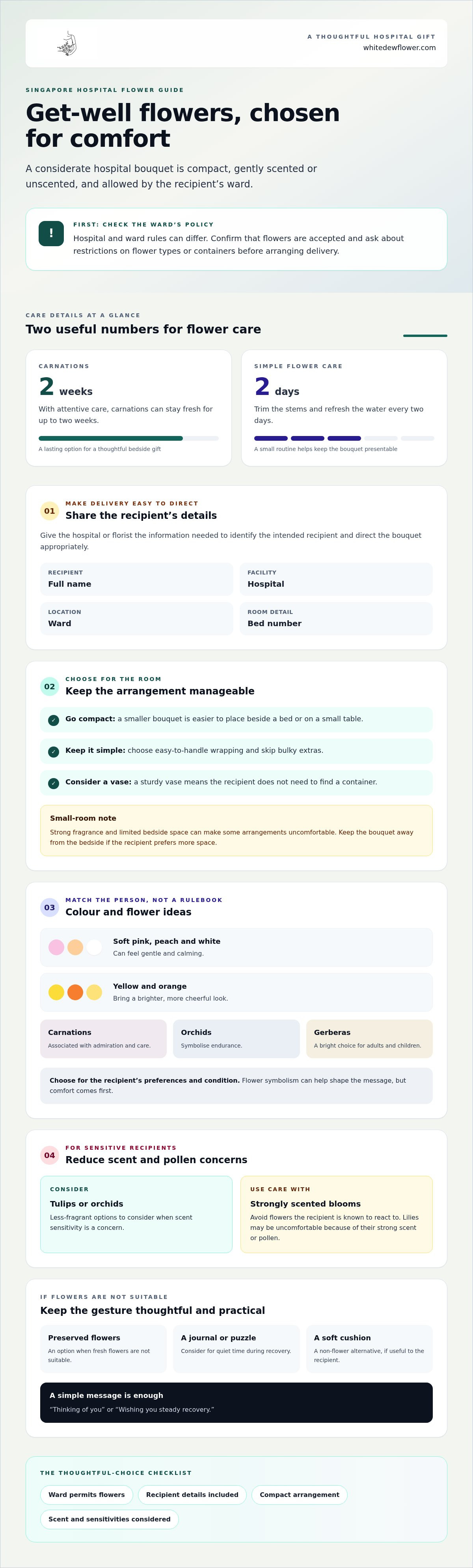
Hospital flower deliveries in Singapore depend on the hospital and ward: some accept them, while others have restrictions. The best get well soon flowers are compact, lightly scented or unscented, and chosen with the recipient’s preferences in mind. Confirm the ward’s flower policy before ordering.
A bouquet can brighten a recovery room, but strong scents, pollen and limited bedside space may make some arrangements uncomfortable. Consider these details, especially if the recipient has allergies or is feeling sensitive.
This guide will help you choose flowers and colours that feel comforting without overwhelming the recipient. You’ll also find practical hospital delivery tips, ideas for sensitive recipients, and simple alternatives when flowers aren’t suitable. From soft pastel roses to cheerful gerberas, choose an arrangement that fits the person and the space where they’re recovering.
Key Takeaways
- Hospital flower policies can differ by ward, so check whether deliveries are accepted before arranging a bouquet.
- Use the recipient’s full name and hospital, ward and bed details to help direct a hospital delivery.
- Choose a compact arrangement and consider soft pastel colours for a calmer, more personal get-well gift.
- For scent or pollen sensitivities, consider less fragrant flowers such as tulips or orchids, or choose a non-flower alternative.
- When a last-minute gift is needed, White Dew Flower’s 24/7 flower vending machines offer a walk-up way to buy flowers at selected locations.
1. Can get-well flowers be delivered to hospitals in Singapore?
Hospitals in Singapore may accept flower deliveries, but policies differ by hospital and ward. Before ordering, ask the hospital or ward whether flowers are allowed and what delivery details are needed. Prepare the recipient’s full name, ward and room number so the bouquet can be directed correctly.
Which Singapore florists offer same-day get-well flower delivery? Florists with same-day delivery can be an option, depending on their order cut-off and delivery coverage. Confirm that the hospital address is covered and place your order before the florist’s stated cut-off.
Keep the setting in mind. Hospital rooms can be cramped, so a smaller bouquet is often easier to place beside a bed or on a compact table. A single sunflower stem in a small vase can make a simple bedside gift without taking up much space. If the recipient prefers a quieter gesture, choose a modest hand bouquet rather than a large arrangement.
Colour helps set the tone. Soft pink, peach and white can feel gentle and calming, while yellow or orange brings a brighter, more cheerful look. Consider the recipient’s preferences and condition rather than choosing a colour based only on its symbolism. Lilies are often associated with renewal and positivity, but their strong scent or pollen may be uncomfortable in a shared room.
To make the gift practical, keep the wrapping easy to handle and skip bulky extras. A sturdy vase means the recipient won’t need to find a container, while a compact hand bouquet is easier to carry and arrange. If fragrance sensitivity is a concern, favour lightly scented or unscented blooms. Seasonal flowers, fewer stems or a smaller design can help keep the arrangement simple and affordable without making it feel impersonal.
For a same-day option, browse same-day flower arrangements and choose a size and colour suited to the recipient. A sunflower and blue-flower bouquet offers a cheerful example; for a hospital room, a smaller, easy-to-place design is usually more practical. The best get well soon flowers are those that fit the ward, the recipient’s comfort and the space available.
2. How flowers can offer comfort during recovery
A get-well bouquet can make a recovery space feel more personal and show someone you’re thinking of them. Choose flowers that suit the recipient and the setting. A cheerful arrangement may suit someone eager for company, while a quieter selection can feel gentler during a restful day. Keep the message simple, such as “Thinking of you” or “Wishing you steady recovery.”
Flower meanings can help shape your message. Carnations are associated with admiration and care, making them a thoughtful way to recognise someone’s strength. Orchids symbolise endurance, a fitting sentiment for a long recovery. Gerbera daisies bring a bright look and can suit both adults and children. Choose a meaning that feels natural for your relationship rather than relying on symbolism alone.
Carnations are a practical option for a flower the recipient can enjoy over time. With attentive care, they can stay fresh for up to two weeks. The recipient or caregiver can trim the stems and refresh the water every two days. This simple routine helps keep the bouquet presentable without making it a chore.
Fragrance also matters during recovery. Strong scents may feel intrusive in a small room or to someone sensitive to smells. Choose lightly scented blooms, and keep the arrangement away from the bedside if the recipient prefers more space. A florist can help select gently scented flowers and create a balanced arrangement that doesn’t overwhelm the room.
A recovery hamper can be useful, but its contents should suit the recipient’s location, dietary needs and ability to use them. For someone at home, fruit such as apples, oranges, pears, grapes or seasonal selections may be practical. Hospital stays call for more restraint because storage and food suitability can be harder to manage. Don’t assume a snack is appropriate just because it’s a common gift.
For halal dietary requirements, check the product’s certification and ingredients. For a vegetarian recipient, look for gelatine or ingredients derived from meat. These checks help prevent a thoughtful gift from creating extra work or going unused. If food isn’t suitable, consider a journal, puzzle or soft cushion for quiet time during recovery.
Keep the gesture personal and manageable. A short note alongside a modest arrangement can say plenty without asking the recipient to respond. For ideas that fit a considerate gifting moment, browse flower gift options and choose a style that reflects the recipient’s comfort and preferences.
3. Hospital flower restrictions and alternatives
Hospital flower policies can differ between facilities and wards in Singapore. Before sending a bouquet, ask the hospital’s ward whether fresh flowers are accepted and whether there are restrictions on flower types or containers. Provide the recipient’s full name, hospital, ward and bed number when arranging delivery. These details help staff identify the intended recipient and direct the gift appropriately.
If flowers are allowed, match the arrangement to the space and the recipient’s ability to manage it. A compact bouquet or small arrangement takes up less room than a large display. Preserved flowers are another option when fresh flowers aren’t suitable, while a simple container can make the gift easier to handle. Avoid oversized designs, bulky wrapping and extras that may be difficult to store beside a hospital bed.
Choose blooms with the shared environment in mind. Lightly scented or unscented flowers are more considerate in enclosed rooms, where strong fragrance may affect other patients. Avoid flowers the recipient is known to react to, and choose an arrangement that feels thoughtful rather than excessive. A short card with a personal note can offer encouragement without giving the patient another item to manage.
When a ward doesn’t accept flowers, choose a useful gift that’s easy to receive. A journal, book or puzzle offers a quiet activity during recovery; a cushion or mug may suit someone with space to keep it. For an unwell colleague, a warm team card can show support without creating storage needs. Choose an alternative based on the recipient’s comfort and what they can use during their stay.
Food gifts need particular care in a hospital setting. A fruit basket or gourmet hamper may be awkward to store, and some foods may not suit the recipient’s dietary requirements or recovery needs. If you’re considering food, choose only items the recipient can safely use or consume. Otherwise, a card, book or compact floral gift can offer encouragement with fewer practical demands.
Follow these steps: ask the ward about its flower policy, confirm the delivery details, then choose a compact option that fits the room. If flowers aren’t accepted, choose a manageable alternative instead of sending an arrangement the patient can’t keep. This makes the gesture considerate for the person recovering and easier for hospital staff to handle.
4. Choosing flower colours and types for get-well wishes
Start with the recipient’s preferences, then match colours to the mood you want the bouquet to convey. Yellow and orange blooms, such as sunflowers or gerberas, create a bright, cheerful look. Pink, peach and white roses offer a softer expression of warmth and encouragement. For someone who prefers quiet surroundings, choose a gentle pastel palette rather than a high-contrast mix.
Flower meanings can add a personal touch. Pink carnations represent care, while white carnations express peaceful well-wishes. Orchids are associated with strength and endurance, making them a thoughtful choice for someone facing a long recovery. Gerbera daisies bring colour and energy, while pastel roses can communicate support without feeling overly formal. Use meanings as a guide, not as a substitute for knowing what the recipient enjoys.
Consider the person as well as the occasion. A child may enjoy colourful gerberas, while an adult who prefers understated gifts may like pale roses or a simple tulip bouquet. For a close friend, choose a favourite flower or colour. For a colleague, a balanced mixed arrangement can feel warm without being too personal. If you’re unsure, use the recipient’s usual home or clothing colours as a practical cue.
Scent and pollen deserve extra thought, especially for sensitive recipients. Tulips tend to have little fragrance, and orchids are often considered minimally fragrant. Roses and hydrangeas are also suggested as lower-pollen or lightly scented options. Sunflowers and daisies can carry more pollen, so they may not suit someone with allergies. Lilies can have a strong scent and prominent pollen, so avoid them when fragrance or pollen is a concern.
For an allergy-conscious bouquet, ask for blooms with minimal fragrance and pollen, and keep the design simple. Removing the pollen-bearing anthers from roses may help reduce exposure. This doesn’t make any flower suitable for everyone, so let known sensitivities guide your choice. A florist can help create a mixed arrangement around those preferences.
Consider colour associations in Singapore, too. White blooms can feel calm and elegant, but some Chinese families associate white chrysanthemums with mourning. That association isn’t universal, so consider the recipient’s background and personal taste before choosing them. If you’re uncertain, peach or pink roses offer warmth without relying on a delicate cultural cue.
For lasting enjoyment, choose fresh blooms that suit the recipient’s care preferences. Carnations can stay fresh for up to two weeks with regular stem trimming and water changes. Tulips may continue growing in a vase, adding a few extra days of interest. A well-chosen bouquet balances colour, scent, pollen and care needs, making the gesture feel personal rather than generic.
5. Flowers suitable for sensitive or allergy-prone recipients
For someone with known pollen or fragrance sensitivities, start with their specific triggers. Ask which flowers or scents they usually avoid, then share that information with the florist. “Hypoallergenic” is a useful selection aim, not a guarantee that every recipient will tolerate every bloom. A card with gentle wishes can complete the gift without adding scented extras.
Some flowers have practical features that may suit a lower-pollen or lower-fragrance choice. Orchid pollen stays within the flower, while hydrangeas have low pollen. Tulips tend to have mild or no fragrance, making them an option for people sensitive to strong smells. These traits can guide your selection, but no flower is universally allergy-free.
Consider the whole bouquet, not just its main flower. A mixed arrangement may include several varieties, foliage and scented fillers. If the recipient reacts to a particular bloom, choose a simpler design and name the flowers to avoid. For roses, removing pollen-bearing anthers may reduce pollen exposure. Ask for a clean, uncluttered arrangement without strongly scented additions.
Match the gift to where the recipient will enjoy it. In a hospital room, a compact design with minimal fragrance is less intrusive to nearby patients. At home, the recipient may have more room to place flowers away from their bed or living area. If flowers aren’t comfortable for them, send a handwritten message, a book or another non-scented gift instead.
Recipient preferences also shape the right choice. Someone who enjoys colour might appreciate a small tulip arrangement, while a person who dislikes floral scents may prefer a simple orchid display. For a friend recovering from illness, write “Wishing you a speedy recovery” rather than choosing a strong fragrance to make the bouquet more noticeable. A personal message can lift spirits without increasing sensory stimulation.
For flower delivery in Singapore, include useful handling notes with your order, such as a known pollen sensitivity or a preference for unscented blooms. Be specific: name the flowers to avoid, the preferred scent level and whether the recipient wants a compact design. This gives the florist clearer direction than simply requesting “allergy-friendly flowers.”
When no fresh flowers seem suitable, choose a non-floral gesture that respects the recipient’s comfort. A card, journal or puzzle can carry warm wishes without pollen or perfume. The best get-well flowers for a sensitive person are chosen around their preferences, not a one-size-fits-all label.
White Dew Flower: 24/7 Flower Vending Machine Access
White Dew Flower’s 24/7 flower vending machine access offers a convenient walk-up option for last-minute gifting in Singapore. It can suit a spontaneous visit or a get-well gesture when you need to pick up flowers without placing an online pre-order. Vending-machine purchases are separate from website orders.
For a hospital visit, first make sure the ward accepts flowers and consider the recipient’s scent or pollen sensitivities. If flowers aren’t suitable, choose a card or another non-floral gesture instead. When a bouquet suits the recipient, White Dew Flower’s vending machines offer another way to purchase flowers at selected locations.
Visit whitedewflower.com to explore flower options and vending machine information.
Choose a Gesture That Feels Personal
A get-well gift doesn’t need to be elaborate to feel meaningful. Let the recipient’s preferences guide your choice: a favourite colour, a simple note or a small gesture that suits their routine can make the gift feel considered. If flowers aren’t right for them, a message or practical non-floral present can still show you’re thinking of them.
Choosing the best get well soon flowers is less about following a fixed formula and more about making the recipient feel seen. Keep their comfort at the centre, and choose a gesture they can enjoy without extra effort. A sincere message wishing them a steady recovery can be just as memorable as the blooms themselves.
Thoughtful choices made with care can bring a little brightness to someone’s day.
Frequently Asked Questions
Can get-well flowers be delivered to hospitals in Singapore?
Yes, flowers can be delivered when the hospital and ward permit them. Plan the handover around the recipient’s ability to receive the gift, especially if they’re resting or attending appointments. A short card helps staff identify the intended recipient if the bouquet arrives while they’re away from their bedside. Keep the message considerate and don’t ask the recipient to reply immediately.
What Are Good Get Well Soon Gifts?
Choose something the recipient can use without needing to prepare or organise it. An audiobook, a comfortable eye mask or a phone charging cable can be practical for someone spending time resting. For a personal touch, choose a title or item connected to a hobby they enjoy. A brief note explaining your choice can make a simple gift feel more individual.
What Is a Healing Gift?
A healing gift is a gesture intended to offer care and encouragement during a difficult period. It might be a personal message, a small comfort item or a thoughtful reminder of a shared memory. Its value comes from showing that you’ve considered the recipient, not from promising an outcome. Keep the gesture suited to their energy and let them enjoy it at their own pace.
What flowers are appropriate for get-well wishes?
Choose flowers based on the recipient’s taste and the message you want to send. Start with a colour they often wear or use at home, then select blooms that complement it. A familiar favourite can make the gift feel more personal than a dramatic arrangement chosen simply because it looks festive. Add a note that expresses support without setting expectations.
What is an appropriate recovery gift for a colleague?
For a colleague, keep the gesture friendly and professional. If a team is contributing, appoint one person to coordinate the card and gift so the recipient doesn’t receive duplicate items. Include colleagues’ names clearly, and keep the message warm but not overly personal. A gift tied to a known interest, such as a favourite author or hobby, can feel more thoughtful than a generic workplace present.
What should I avoid sending to someone recovering?
Avoid gifts that create social pressure or require the recipient to host, entertain visitors or respond on a schedule. A surprise visit, a complicated activity kit or a message asking for frequent progress updates may feel like extra work. Consider the person’s energy and privacy before arranging anything. A low-pressure note saying there’s no need to reply lets them accept the gesture on their own terms.
What flowers are best to send someone who is ill?
There isn’t one flower that suits everyone who is ill. Think about how the recipient will enjoy the bouquet: someone who likes watching flowers open may appreciate blooms at different stages, while someone who prefers a consistent look may favour flowers with a similar shape. A simple design is easy to appreciate at a glance, even during a quiet day at home.
Which flowers are suitable for hospital delivery in Singapore?
Choose an arrangement that arrives ready to display, rather than one the recipient must unwrap, trim or assemble. Attach the card securely so the sender is clear, and choose a restrained design for a setting where the recipient may not be able to arrange flowers themselves. The ward’s rules are decisive, so select blooms only after confirming that flowers are permitted.
Comments
0 Comments
Leave a Comment