How to Follow Bouquet Care Instructions for Longer-Lasting Flowers
•Posted on October 21 2026

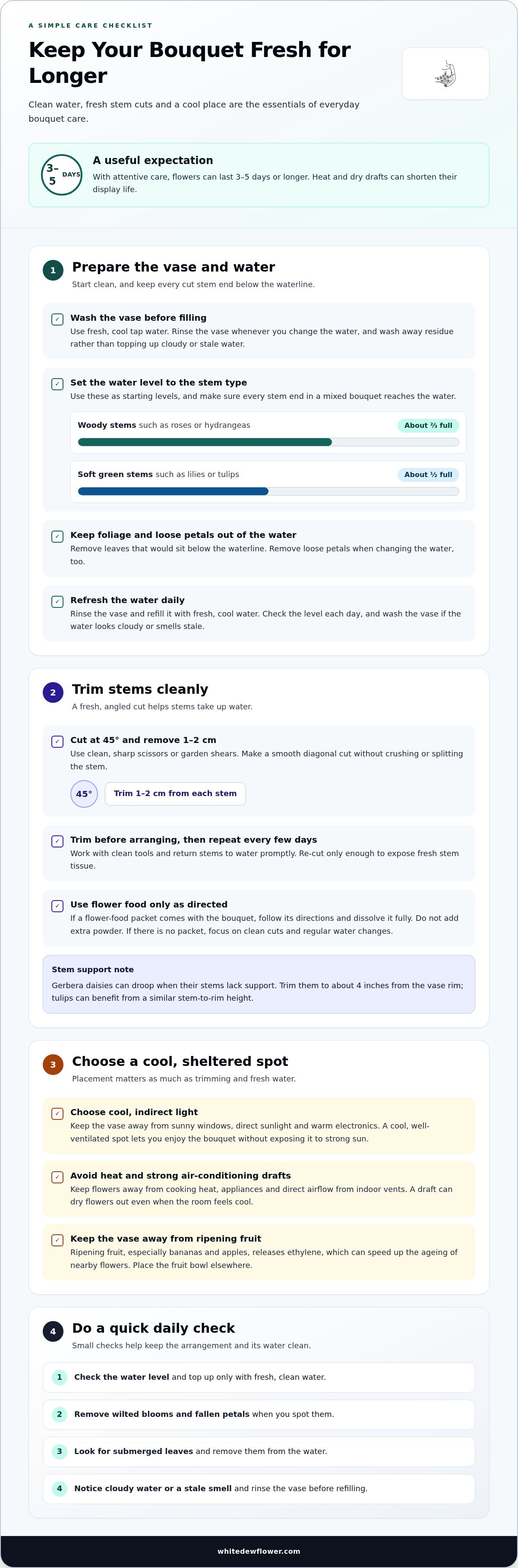
Heat and dry drafts can shorten a bouquet’s display life, even when the flowers look fresh on arrival. With attentive care, flowers can last 3-5 days or longer. Good bouquet care instructions start with a clean vase, fresh water and a spot away from direct sunlight, heat sources and strong air currents.
It’s natural to focus on trimming the stems and changing the water, but where you place your bouquet matters too. In Singapore’s warm conditions, a cool, well-ventilated spot can help flowers stay fresh. Keep them away from sunny windows, cooking heat and direct airflow from air-conditioning vents.
These bouquet care instructions cover the essentials: prepare a clean vase, make fresh angled cuts, replace the water regularly and choose a suitable spot. You’ll also learn how to monitor wilting blooms and care for mixed bouquets with different stem types. A few simple habits can help you enjoy your flowers for longer.
Key Takeaways
- Choose a clean vase and refresh the water daily to help limit stagnant water and keep the bouquet hydrated.
- Trim stem ends at a 45-degree angle with clean, sharp scissors to support water uptake.
- Remove leaves that would sit below the waterline, and take out wilted blooms as they appear.
- Place flowers in a cool, ventilated spot away from direct sunlight, heat sources and ripening fruit.
- Keep bouquets clear of strong air-conditioning drafts, which can dry flowers out faster.
Avoiding sunlight, heat, ripening fruit and stagnant water
- Before arranging your bouquet, choose a cool, ventilated spot away from direct sunlight. A sunny windowsill can warm the petals and water, while nearby appliances may add heat. In Singapore, avoid placing flowers beside a cooker, on a sunlit balcony or near warm electronics. Indirect light lets you enjoy the arrangement without exposing it to strong sun.
- Keep the vase away from ripening fruit, especially bananas and apples on a kitchen counter. Ripening fruit releases ethylene, a gas that can speed up the ageing of nearby flowers. If the bouquet is receiving attention in a dining area, move the fruit bowl to another counter. This small placement change helps keep fruit and flowers from sharing the same enclosed space.
- Before adding water, remove every leaf that would sit below the waterline. Submerged foliage breaks down and dirties the water sooner. Check each stem, including leaves tucked beneath the bouquet wrap. Keep petals above the water too, and remove any loose petal when you change the water.
- Start with a clean vase and fresh, cool tap water. Fill it about two-thirds full for woody stems such as roses or hydrangeas. For soft green stems such as lilies or tulips, use about half a vase of water. These levels suit the different stem types while keeping the cut ends submerged. For a mixed bouquet, make sure every stem end reaches the water.
- Change the water daily, rinsing the vase before refilling it with fresh, cool water. Watch for cloudiness, floating leaves or a stale smell, and wash away residue instead of topping up dirty water. Check the water level each day, as warm indoor conditions can encourage evaporation. A clean vase and a regular routine are all you need.
- Keep the arrangement away from strong air-conditioning airflow, sunlight and heat. A bouquet placed directly under an indoor vent can dry out, even when the room feels cool. Choose a stable spot elsewhere in the room, away from frequently opened doors. Decide where the flowers will go before settling them into their display position.
Trimming flower stems
- Prepare clean, sharp scissors or garden shears before unwrapping the stems. Trim about 1-2 cm from each stem at a 45-degree angle, then place the flowers in water promptly. The diagonal cut creates a fresh surface for water uptake. Avoid crushing soft stems with blunt scissors, as bruised ends can interfere with hydration. Work over a clean surface so the new cuts stay clear of debris.
- Trim the stems before arranging the bouquet, even if they already look freshly cut. Stem ends can begin to seal after harvest, making it harder for cut flowers to draw up water. A fresh angled cut exposes a new surface. If the stems vary in length, trim each to suit the vase while keeping the arrangement balanced and every cut end below the waterline.
- As part of your care routine, make a small angled trim every few days. Remove only enough to expose fresh stem tissue, then return the flowers to clean water. Use sharp tools and wipe them between bouquets, especially after trimming a wilted stem. This supports water uptake without shortening the stems more than necessary.
- Add the flower-food packet to the vase water if one comes with your bouquet. Follow its directions so the solution has the intended balance for the flowers, and dissolve it fully before adding the stems. Don’t use extra powder to make it stronger. If there’s no packet, use fresh water and focus on clean cuts and regular water changes.
- Check the stems and waterline each day. Remove leaves below the water, where they can decay and encourage bacteria. Take out wilted flowers and fallen petals as soon as you spot them, since decaying plant material can affect the surrounding water. If one bloom droops while the others remain firm, remove it carefully without disturbing the whole arrangement.
- After trimming, place the vase away from direct sunlight, heat and ripening fruit. A sunny window or warm appliance can heat the water, while fruit releases gases that can speed flower ageing. In a Singapore home, choose a cooler spot away from a kitchen hob and strong window light. For a fresh bouquet to enjoy at home or give as a gift, explore fresh flower bouquets in Singapore.
Trimming stems at an angle
Trim flower stems at a 45-degree angle, then repeat every few days as needed. A fresh slanted cut helps stems take up water, supporting flowers as they open and helping them last longer.
- Use clean, sharp scissors to make a smooth diagonal cut across each stem. Remove about 1-2 cm from the end, taking care not to crush or split the stem. A clean cut exposes fresh tissue; a ragged end can restrict water uptake. Cut each stem individually so you can adjust its length to the arrangement without damaging nearby blooms.
- Re-cut stems every few days, or when the ends look dry or discoloured. Refresh the vase water every 1-2 days, then trim the stems before returning the bouquet. This sequence gives freshly cut ends access to clean water. Don’t leave flowers out of water while trimming the whole arrangement; work through a few stems at a time.
- Before returning stems to the vase, remove any leaves that would sit below the waterline. Wet foliage breaks down and can encourage bacteria, clouding the water around the cut ends. Check the stems at the back of the bouquet too, where leaves may be hidden. Keep healthy upper leaves intact to frame the flowers.
- Support delicate or top-heavy stems by trimming them to suit the vase, rather than shortening every flower equally. Gerbera daisies can droop when their stems lack support, so cut them to about 4 inches from the vase rim. Tulips can also benefit from a similar stem-to-rim height. Use a clean vase that holds stems upright without pressing petals against its edge.
- Choose the water temperature to suit your needs. For routine care, use fresh, cool water and keep the cut ends submerged. Warm water can encourage blooms to open more quickly, so use it when you want to display the flowers sooner. It doesn’t replace trimming: a fresh angled cut still matters.
- Check the cut ends whenever you refresh the arrangement. If a stem is soft, crushed or dark at the base, use clean scissors to trim above the damaged section. Return it promptly to clean water. For a mixed bouquet, assess each stem separately: sturdy roses and soft-stemmed tulips may need different lengths to sit securely and take up water.
Cleaning and sterilizing the vase
- Empty the vase before preparing it for a new bouquet. Wash it with hot, soapy water, scrubbing the base, rim and narrow neck, where residue can cling. Rinse thoroughly to remove all soap, which can mix with fresh water. A clean vase gives cut stems a fresh start and removes debris from the previous arrangement.
- Use a bottle brush to clean tall or narrow vases that your hand can’t reach. Scrub the bottom and inner walls, then rinse thoroughly. If an old waterline leaves a film, wash the vase again instead of covering it with fresh water. Dry the outside with a clean towel and let the inside drain before filling. These bouquet care instructions also apply when reusing a vase for a different flower variety.
- Choose a vase that supports the stems without squeezing them together. For woody stems such as roses or hydrangeas, fill it about two-thirds full. Soft green stems, including lilies and tulips, need about half a vase of water. If your bouquet mixes stem types, ensure every cut end reaches the water while leaves stay above the waterline.
- Fill the clean vase with fresh, cool tap water, then add flower food if your bouquet includes a packet. Follow its directions and dissolve the contents before adding stems. Change the water daily, rinsing away residue before refilling. This routine helps limit bacterial buildup, especially in Singapore’s warm, humid indoor conditions, where water can become cloudy quickly.
- Inspect the vase each time you change the water, not only when it looks dirty. Remove fallen leaves and petals, then wash away any slippery film before refilling. Cloudiness or a stale smell means the vase needs a thorough rinse. Keep fruit bowls separate from the arrangement, since ethylene from ripening fruit can speed up flower ageing.
- Use vase life as a guide, not a fixed promise. Flowers can be expected to last 3-5 days or longer with attentive care, while variety, freshness at receiving and room conditions affect the result. Some blooms need a few days to open fully. Keep the vase clean, refresh its water daily and remove fading flowers so healthy blooms remain presentable. These bouquet care instructions help you keep the display tidy as it changes.
Keeping bouquets away from heat and drafts
Place your bouquet in a cool, ventilated spot with indirect light, away from direct sun, appliances and strong airflow. At home in Singapore, keep the vase clear of sunny windows, kitchen heat and air-conditioning vents.
- Check the room before placing your arrangement. A bright spot can suit flowers as long as sunlight doesn’t fall directly on them. Move the vase away from windows that heat up during the day, especially if the glass or nearby surface feels warm. A side table across the room can keep the flowers in view without exposing them to heat.
- Check for airflow from an air-conditioner, fan or frequently opened door. Hold a loose piece of tissue near the planned spot; if it flutters, a draft may reach the flowers. Choose a nearby place with steadier air. Direct airflow can dry petals and leaves, even when the room feels cool.
- Keep the vase away from heat-producing appliances such as a rice cooker, oven or stovetop. Kitchen counters may seem convenient, but cooking warms the area around the bouquet. Choose a dining table or living-room surface instead, leaving enough space so the flower heads don’t press against a wall.
- Use the bouquet’s condition to reassess its position. If petals feel dry, leaves curl, or blooms begin wilting on the side facing a window, move the vase to indirect light. Turn the arrangement gently so all sides receive a similar display. Don’t place flowers on the bottom shelf beside warm appliances or electronics.
- Keep up your water routine after moving the bouquet. Check the water daily and refresh it as needed; a cooler location doesn’t replace clean water. If the vase is near an air-conditioning unit, inspect the water level and leaves during your daily check. Remove fallen petals before they collect around the stems.
- Choose a stable surface away from household traffic. A draft from an open door can disturb delicate stems, while a narrow ledge increases the risk of knocking over the vase. Set the arrangement on a level table where it can be enjoyed without blocking a walkway or sitting beside a fan.
- Adjust the spot as Singapore’s indoor conditions change. A window that stays shaded in the morning may receive stronger sunlight later. If you switch on a fan or move furniture near the bouquet, check whether airflow now reaches its blooms. These small placement checks help preserve a beautiful arrangement for longer, and can guide your choice of fresh flowers from White Dew Flower.
White Dew Flower: 24/7 Flower Vending Machine Access
White Dew Flower offers 24/7 flower vending machine access for last-minute gifting in Singapore. It’s a convenient option when you need flowers outside your usual shopping routine, such as before a celebration or an unexpected visit. Vending-machine purchases are separate from online pre-orders.
For a graduation, choose from Graduation Bouquets. ROM/Wedding Bouquets suit meaningful ceremony moments, while Omakase Bouquets offer a curated gift. Once you bring the flowers home, follow the care steps above: trim the stems, use a clean vase and keep the arrangement away from heat and drafts.
Explore White Dew Flower’s bouquet options online, or contact the team if you’d like to make an enquiry.
Make flower care part of the moment
Make caring for your bouquet a small, enjoyable part of your routine at home. Choose a spot where you’ll notice its changing blooms, and take a moment to see how the arrangement opens and shifts. Paying attention helps you respond to the flowers’ condition rather than relying on a fixed schedule.
Make these bouquet care instructions part of your daily rhythm. A quick look while setting the table or tidying your home can help you notice changes and keep the display looking considered. For your next celebration, choose flowers that suit the recipient and the moment you want to create.
A thoughtful bouquet can make an ordinary day feel special. Choose one you love and enjoy having it at home.
Frequently Asked Questions
How Long Will My Flowers Last?
With attentive care, cut flowers can last 3-5 days or longer. The actual display life depends on the flower varieties, their condition when received, and their surroundings. Some blooms take 2-3 days to open fully, so a bouquet may look different after arriving home. Watch for changes in petal firmness and stem posture, then remove individual blooms as they fade.
How to prepare a vase for a fresh flower bouquet?
Wash a vase with soap and water, rinse it thoroughly, then fill it with fresh water. Remove the bouquet wrapping and discard any water inside its transport packaging before arranging the stems. If a flower-food packet is included, add it according to the directions. Remove leaves that would sit underwater, and make sure the vase supports the arrangement without crowding the stems.
How much water should I put in a bouquet vase?
For a mixed bouquet, begin with a clean vase filled about two-thirds with water, then check that every cut stem reaches it. Adjust the level to suit the flowers: woody stems such as roses and hydrangeas need a deeper fill, while soft green stems such as lilies and tulips need less. For tulips arranged on their own, start with about two inches of water and top it up daily to maintain the level.
How often should I change bouquet water and clean the vase?
Change the water daily for a mixed bouquet, rinsing the vase whenever you refill it. If the water turns cloudy or leaves fall in, clean the vase instead of simply topping it up. Remove residue from the bottom and inner walls, then rinse away all soap. Carnations may follow a different routine: change their water about every 2-3 days, or sooner if it becomes cloudy.
Should bouquet leaves be removed below the waterline?
Yes. Remove leaves that would sit underwater before arranging the flowers. Submerged foliage breaks down and can dirty the vase water, so inspect the lower stems individually. If the bouquet is crowded, separate the stems gently to find leaves hidden near the base. Keep healthy leaves above the waterline, where they can frame the flowers without sitting in the vase water.
How to use flower food, and what alternatives work?
Add the included flower-food packet to the vase as directed, and dissolve it before arranging the stems. If you don’t have a packet, a research-listed homemade option is 3 tablespoons of sugar in each quart (liter) of warm water. Another listed recipe uses 2 tablespoons of white vinegar per quart (liter) of warm water. Choose one preparation rather than combining recipes, and use a clean vase.
Which flowers need special care or different water levels?
Tulips need a shallow start: use about two inches of water, then top it up daily to maintain the level. Keep hydrangea water fresh as part of regular bouquet care. For lilies, carefully remove pollen-covered stamens to reduce the risk of stains on fabric or nearby surfaces. These specific steps are most useful when a bouquet features these flowers as its main blooms.
How long do common cut flowers last with proper care?
Many cut flowers last 3-5 days or longer with attentive care, while carnations can last longer. Their average vase life is around 14 days, and they can last up to three weeks with proper care. Treat these figures as variety-specific guidance, not a fixed lifespan for every bouquet. Flower freshness, room conditions and daily maintenance all affect how long individual blooms remain attractive.
Comments
0 Comments
Leave a Comment